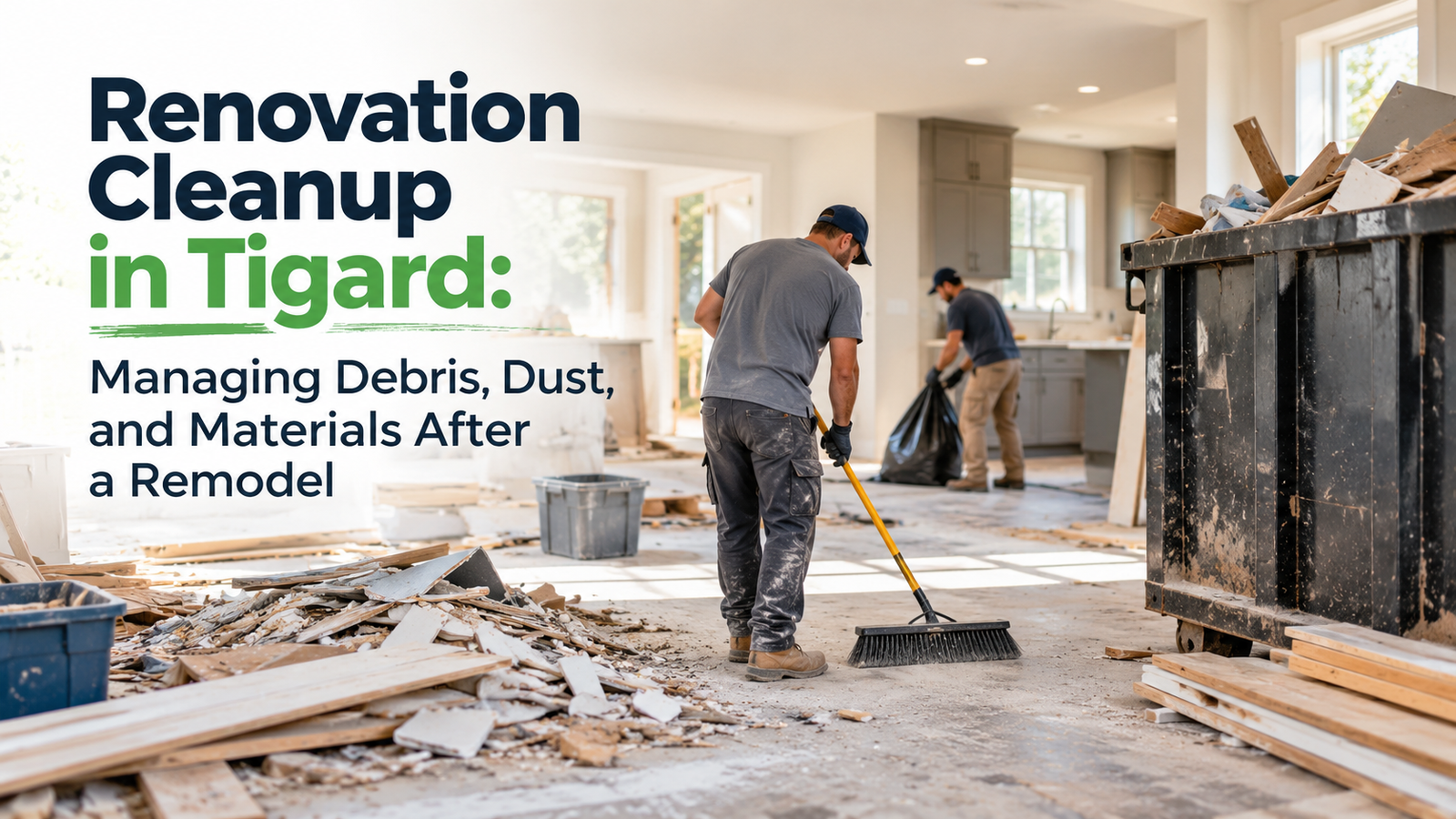
A renovation changes a home in ways that photographs rarely capture. Behind the new kitchen or the refinished bathroom is a stream of material that had to go somewhere: old cabinets, torn-out flooring, offcuts of lumber, broken tile, drywall dust that found its way into every corner, and the packaging of everything that came in. Renovation cleanup is the work of dealing with all of that, and it is often more complicated than people expect.
This guide explains what Renovation Cleanup Tigard debris actually consists of, how cleanup is organized across the different phases of a project, which materials can be recovered instead of buried, and what health and environmental rules are worth knowing about in the Portland metropolitan area. It also considers conditions that are specific to Tigard, including the age of much of the local housing stock, the wet climate, and the proximity of creeks and storm drains. It is meant as general background for anyone trying to understand why cleanup is a project in its own right rather than a quick sweep at the end.
What Counts as Renovation Debris
Renovation debris is any material generated by altering, repairing, or improving a building. It differs from ordinary household trash in volume, weight, and variety. A single bathroom remodel can generate a pile that surprises everyone who sees it.
Typical categories include:
- Demolition waste. Plaster, drywall, old flooring, tile, countertops, cabinets, fixtures, and framing removed during demolition.
- Construction offcuts. Pieces of lumber, plywood, trim, pipe, wire, and sheet goods left over from new work.
- Packaging. Cardboard boxes, plastic wrap, foam, and pallets that protected materials during delivery.
- Fine dust. Drywall dust, sanding dust, tile cutting dust, and concrete dust, which are small in volume but significant for health and cleanliness.
- Hazardous and special materials. Paint, solvents, adhesives, caulks, old light fixtures, and in older homes, materials that may contain lead or asbestos.
- Liquids and sludge. Paint rinse water, joint compound residue, and wash water from tile and concrete work.
Each category has a different best destination, which is why mixing them into one pile creates problems later.
Why Cleanup Is Different From General Junk Removal
A cleanout deals with belongings. Renovation cleanup deals with building materials, and building materials are heavier, sharper, and more regulated. Drywall absorbs water and crumbles. Tile and concrete are dense. Lumber carries nails and screws. Insulation irritates skin and lungs. Old paint and finishes may contain regulated substances.
The work also happens in a live construction environment, with tools, extension cords, dust, and changing conditions. Cleanup is not a single event at the end of the project. In a well-run renovation it happens in rhythm with the work itself.
The Phases of a Renovation and Their Debris
Renovations tend to pass through recognizable phases, and each produces its own kind of waste.
Demolition phase. This is the heaviest stage. Old materials are removed down to framing or subfloor. The debris is bulky and dusty, and it often includes the most hazardous materials. This is when hidden surprises, such as old wiring, rotted wood, or suspect insulation, tend to appear.
Rough-in phase. Plumbing, electrical, and framing work generates offcuts of wire, pipe, wood, and plastic fittings. Debris is smaller but sharp, and loose fasteners are scattered widely.
Insulation and drywall phase. Insulation scraps, drywall offcuts, and joint compound buckets accumulate. Drywall sanding produces extremely fine dust that travels through the whole house if it is not contained.
Finish phase. Flooring, tile, trim, paint, and cabinetry bring more packaging, adhesive containers, paint cans, and offcuts of finished materials.
Final phase. Fixtures are installed, protective coverings come off, and the final cleaning begins. Surprising amounts of dust, caulk crumbs, and stray fasteners are found in this stage.
Keeping each phase’s debris separate and removing it promptly makes the later stages safer and faster.
Sorting at the Source
The most effective way to manage renovation waste is to sort it at the point where it is produced. A pile of mixed debris is difficult to separate later, and most facilities that recover materials only accept loads that have been sorted into clean categories.
A useful sorting scheme for a typical project includes:
- Clean wood. Untreated lumber, plywood, and trim without paint or finish.
- Painted or treated wood. Often handled differently because of coatings and preservatives.
- Drywall. Kept dry and separate, because wet drywall is much harder to process.
- Metal. Pipe, wire, flashing, and fasteners, which have good scrap value in recycling markets.
- Concrete, brick, and tile. Dense mineral materials that can often be crushed for use as base material.
- Cardboard and packaging. Flattened and kept dry.
- Reusable items. Cabinets, doors, fixtures, appliances, and lumber in good condition.
- Hazardous and special items. Paint, chemicals, batteries, and suspected asbestos or lead materials, kept entirely apart.
- General waste. Everything that cannot be recovered.
Setting up labeled zones before the project begins, even in a driveway or garage, makes the difference between a controlled cleanup and a chaotic one.
What Can Be Recovered Instead of Buried
A large share of renovation debris has value in reuse or recycling.
Reusable building materials. Doors, windows, cabinets, light fixtures, sinks, tubs, and lumber in decent condition are often accepted by building material reuse organizations. The Portland area has a strong culture of building material reuse, and many items can be diverted this way. Deconstruction, which is the careful dismantling of a building or room to save materials, has grown in popularity for this reason.
Wood. Clean wood can be chipped for landscaping, ground into mulch, or processed into fuel or engineered wood products. Treated or painted wood is more limited.
Metal. Copper pipe, aluminum, steel framing, and other metals are sold as scrap and are among the most reliably recycled construction materials.
Concrete, brick, and asphalt. These can be crushed and reused as road base or fill, which keeps large volumes out of landfills.
Drywall. Clean gypsum drywall can sometimes be ground and reused as a soil amendment or as feedstock for new gypsum products. It must be kept dry and free of contaminants.
Cardboard and packaging. Cardboard goes through ordinary recycling channels. Clean foam and film plastics may have separate collection options.
Carpet and padding. Some carpet and padding is recycled into new products or used as fuel, though availability varies.
Appliances. Metal appliances are scrapped, and those with refrigerants require proper recovery of the refrigerant first.
Metro regulates how certain construction and mixed dry waste is handled in the region and requires that much of it be processed at facilities that recover usable materials. The practical effect is that loads of mixed construction debris are generally routed to a sorting facility rather than straight to a landfill.
Health and Safety During Cleanup
Renovation dust and debris create real health concerns, and a few considerations are worth highlighting.
Dust control. Fine dust from drywall, tile, and concrete can irritate the lungs, and silica dust from cutting concrete, stone, or tile is a recognized hazard. Wetting surfaces while cutting, using vacuum attachments on tools, sealing off work areas with plastic sheeting, and using HEPA-filtered vacuums rather than dry sweeping all reduce airborne dust.
Personal protection. Properly fitted respirators, eye protection, gloves, and sturdy footwear are standard for debris handling. Sharp edges, exposed nails, and broken glass are common injuries.
Lead paint. Homes built before 1978 may contain lead-based paint. Sanding, scraping, or demolishing painted surfaces can release lead dust, which is especially harmful to children and pregnant women. Federal rules require lead-safe work practices in many circumstances involving older homes, and cleanup methods change accordingly. Dry sweeping and ordinary household vacuums are not appropriate for lead dust.
Asbestos. Some older materials, including certain flooring, insulation, textured ceilings, and siding, may contain asbestos. When suspect materials are disturbed, fibers can become airborne. Oregon’s environmental regulators have specific requirements around asbestos surveys, handling, and disposal, particularly for demolition and larger projects. Suspect materials should be tested before they are disturbed rather than assumed to be safe.
Heavy lifting. Demolition debris is deceptively heavy. Wet drywall, tile, and concrete can injure backs, so smaller loads, carts, and teamwork are sensible.
Electrical and water hazards. Cleanup around exposed wiring or plumbing needs care, and power should be confirmed off before working near open walls.
Environmental Considerations in the Tigard Area
Tigard sits within the Tualatin River watershed, and Fanno Creek runs through the heart of the city. Local streams support fish and wildlife, and storm drains in the area generally carry runoff directly to creeks without treatment. That matters for renovation cleanup.
Wash water from paint, tile, and concrete work should not be poured into the street or a storm drain. Paint solids, concrete slurry, and joint compound can harm aquatic life. Rinse water is generally handled by containing it, letting solids settle, and disposing of it properly rather than letting it run off the property.
Debris stored outside should be covered and kept on hard surfaces away from drains, because rain can carry fine particles and chemical residues toward the street. Stockpiled soil or materials during exterior work may need erosion control, such as silt fencing or covers, to keep sediment out of waterways.
Open burning of construction debris is prohibited in the Portland metropolitan area and is a poor idea in any case, since painted, treated, or glued materials release harmful emissions.
Conditions in Tigard That Shape Cleanup
Older housing stock. Much of Tigard’s housing was built in the decades after World War II, with later growth in the 1970s through 1990s. That means many renovations involve materials from eras when lead paint, asbestos-containing products, and older insulation were common. Cleanup in such homes often requires extra care.
Wet weather. Western Oregon’s rainy season makes storing debris outdoors difficult. Rain can soak drywall and cardboard, add weight to lumber and demolition waste, and spread dust and debris into the yard and street. Covering stockpiles and scheduling heavy exterior work for drier months helps.
Mature trees and landscaping. Many Tigard properties have large trees and carefully tended gardens. Debris movement needs to protect root zones, lawns, and plantings.
Narrow access and tight lots. Some neighborhoods have steep driveways, limited street parking, and homeowner association rules about materials stored in view. Planning staging areas and removal timing prevents conflict with neighbors.
Hillside properties. Parts of the city, including areas toward Bull Mountain, are hilly. Heavy materials on slopes require extra care to prevent sliding and erosion.
The Final Cleanup: Where the Details Matter
When the construction work is finished, the final cleaning begins. This stage is more than sweeping.
Dust removal from top to bottom. Dust settles on every surface, including the tops of door frames, light fixtures, and inside cabinets. Cleaning from the highest surfaces downward prevents re-contamination.
Vacuuming with HEPA filtration. Standard household vacuums can blow fine dust back into the air. HEPA-rated vacuums capture the particles that cause the most irritation.
HVAC attention. Dust can enter ductwork and vents during a renovation. Sealing registers during work and replacing filters afterward helps keep the system clean.
Surface cleaning. Windows, fixtures, floors, and countertops need careful cleaning to remove adhesive residue, grout haze, paint splatter, and protective film marks.
Fastener sweep. Stray screws and nails in the yard and driveway can puncture tires and injure pets. A magnetic sweeper is a practical tool.
Final inspection. Walking through the space with fresh eyes catches missed debris, forgotten materials, and small damage that should be addressed.
Common Mistakes in Renovation Cleanup
Waiting until the end. Letting debris accumulate throughout a project creates safety hazards and makes the final cleanup much larger.
Mixing categories. A pile of mixed debris is hard to sort, and loads that contain restricted items can be rejected at facilities.
Ignoring dust. Fine dust spreads far beyond the work area and settles in places that are hard to clean.
Dry sweeping in older homes. Sweeping dry debris in a house that may contain lead paint spreads hazardous dust.
Storing wet drywall. Wet gypsum can be difficult or impossible to recycle and may grow mold.
Overlooking small hazards. Nails, screws, and glass left in the yard or driveway cause injuries and flat tires.
Pouring waste liquids into drains. Paint and concrete wash water can contaminate local waterways.
Frequently Asked Questions
What is renovation cleanup?
It is the process of removing, sorting, and disposing of the debris and dust produced by a remodel or repair project, and of cleaning the space once construction work is done.
What kinds of materials can be recycled after a remodel?
Clean wood, metal, concrete, brick, cardboard, drywall, and some carpet can often be recovered. Reusable items like doors, cabinets, and fixtures can be donated to building material reuse organizations.
How should drywall dust be handled?
Contain the work area with plastic sheeting, wet-wipe surfaces, and use a HEPA vacuum. Dry sweeping spreads fine particles into the air and into other rooms.
Is it safe to sand or demolish painted surfaces in an older home?
In homes built before 1978, painted surfaces may contain lead. Lead-safe work practices are recommended, and in many circumstances required, to prevent dust from spreading.
How do I know if a material contains asbestos?
Only testing can confirm it. Suspect materials, such as old flooring, textured ceilings, and certain insulation, should be tested by a qualified laboratory before they are disturbed.
Can I put construction debris in my regular garbage cart?
Usually not. Construction and demolition waste is generally too heavy and bulky for household carts, and local rules direct most of it to facilities that sort and recover materials.
How do I keep debris out of storm drains?
Store materials on hard surfaces away from drains, cover them in wet weather, contain wash water, and sweep rather than hosing debris into the street.
What is deconstruction?
Deconstruction is the careful dismantling of a room or building to save reusable materials, in contrast to demolition, which breaks everything into debris.
Final Thoughts
Renovation cleanup is part of the renovation itself, not an afterthought. Materials need to be sorted, dust needs to be controlled, hazards need to be recognized, and valuable components need to find a second life instead of ending up buried. In a place like Tigard, where older homes, wet weather, and nearby creeks all shape the work, a thoughtful approach to debris protects health, property, and the environment at the same time.
For anyone learning about renovation cleanup in Tigard, the best starting point is to think about debris as a stream that begins on the first day of demolition rather than the last day of the project. Sort as you go, keep dust under control, treat older materials with respect, and look for the reuse and recycling channels that keep good material in circulation. A clean finish is the visible result, but the real measure of good cleanup is everything that did not become waste.